


Posts By :

admin

The Weight of a Legacy 750 360 admin

The Weight of a Legacy

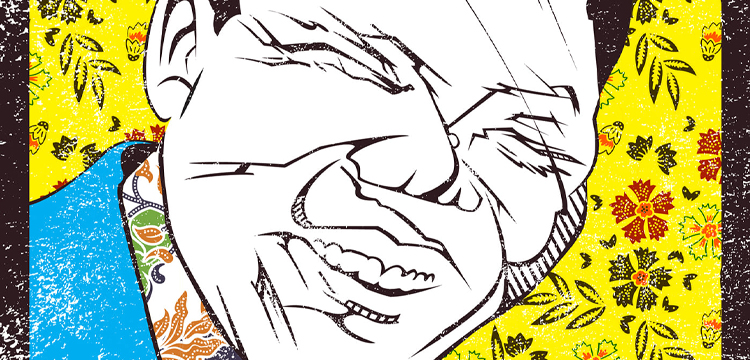
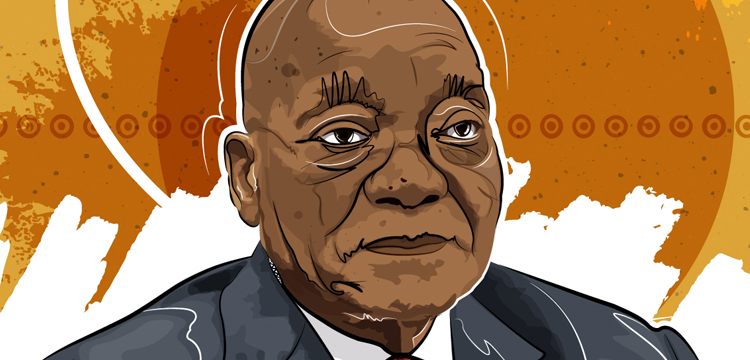
The provided illustration captures the formidable and deeply complex presence of South Africa’s former president, Jacob Zuma. Rendered in a striking, modern graphic style, the portrait goes beyond capturing a mere likeness. It uses color, symbolism, and texture to weave a narrative of tradition, political endurance, and undeniable polarization.

Here is an analysis of the artistic choices and what they reflect about one of South Africa’s most debated historical figures.
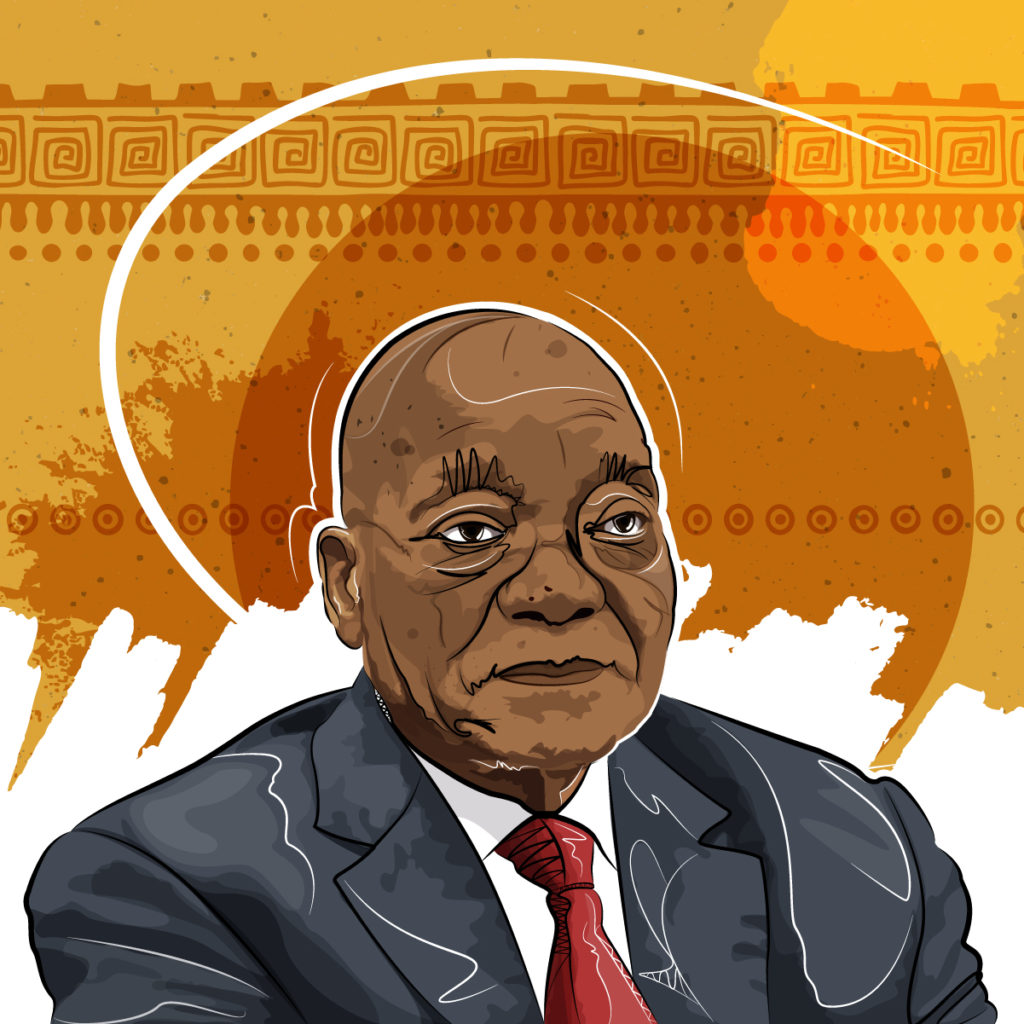
The artist frames the subject not just in a vacuum, but deeply embedded within his cultural context. This is highly reflective of Zuma’s political brand, which has always leaned heavily on his Zulu heritage and identity as a man of the people.

  • Earthy Color Palette: The backdrop is awash in mustard yellows, golds, and burnt oranges. These warm, earthy tones instantly evoke the South African landscape, grounding the figure in the soil of the nation.

  • Traditional Motifs: Across the top of the frame runs a distinct geometric pattern, reminiscent of traditional Southern African beadwork or architectural motifs. This serves as a visual anchor to his traditionalist roots, a cornerstone of his populist appeal.

  • Textured Background: The subtle splatters and textured overlays give the image a gritty, grounded feel. It suggests a history that is not clean or sterile, but messy, lived-in, and turbulent.

The treatment of Zuma’s face is the focal point of the piece, telling a story of a long, controversial, and deeply entrenched political life.

  • Etched with History: The artist does not shy away from the deep lines, folds, and weathering on his face. Rendered with sharp, dark linework, these features suggest a heavy burden of experience. It is the face of a man who has weathered immense political storms, legal battles, and national controversies.

  • The Stoic Gaze: His expression is serious, looking slightly off-center. It is a contemplative look that could be interpreted as either visionary or guarded. It lacks the trademark, charismatic laugh he was often known for in the media, presenting instead a more solemn, patriarchal figure.

  • The Power Suit: Clad in a dark, structured suit with a bold red tie, the image contrasts his traditionalist background with the modern trappings of state power.

Perhaps the most intriguing element of the composition is the stylized framing around his head.

  • The Pseudo-Halo: A sweeping, incomplete white circle frames the darker orange sun-like shape directly behind him. In art history, such circular framing often denotes a halo, suggesting reverence, martyrdom, or a larger-than-life status.

  • Cult of Personality: Whether intended ironically or sincerely by the artist, this framing perfectly captures the “cult of personality” that surrounds Zuma. To his detractors, he is a symbol of a compromised era; to his staunch supporters, he remains an untouchable, revered figure who stands against the establishment.

This illustration is a compelling piece of political portraiture. By juxtaposing the sharp, modern lines of a corporate suit with the warm, textured motifs of traditional African heritage, the artist captures the inherent duality of Jacob Zuma. The artwork serves as a powerful reflection of a leader whose legacy continues to cast a long, heavily textured shadow over the South African political landscape.
Power & Complex Legacy 750 360 admin

Power & Complex Legacy

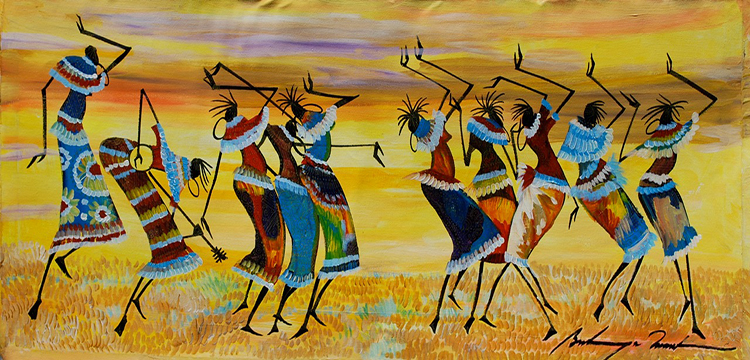
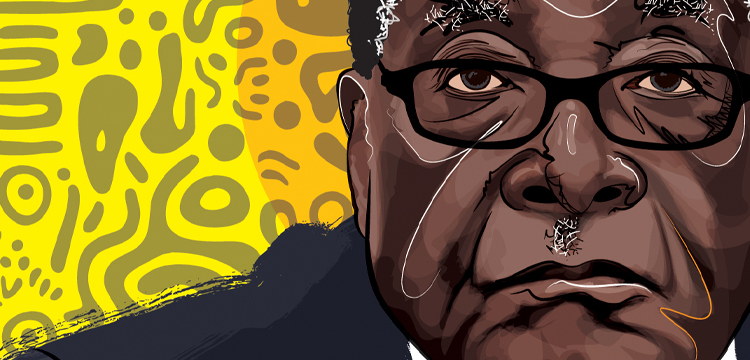
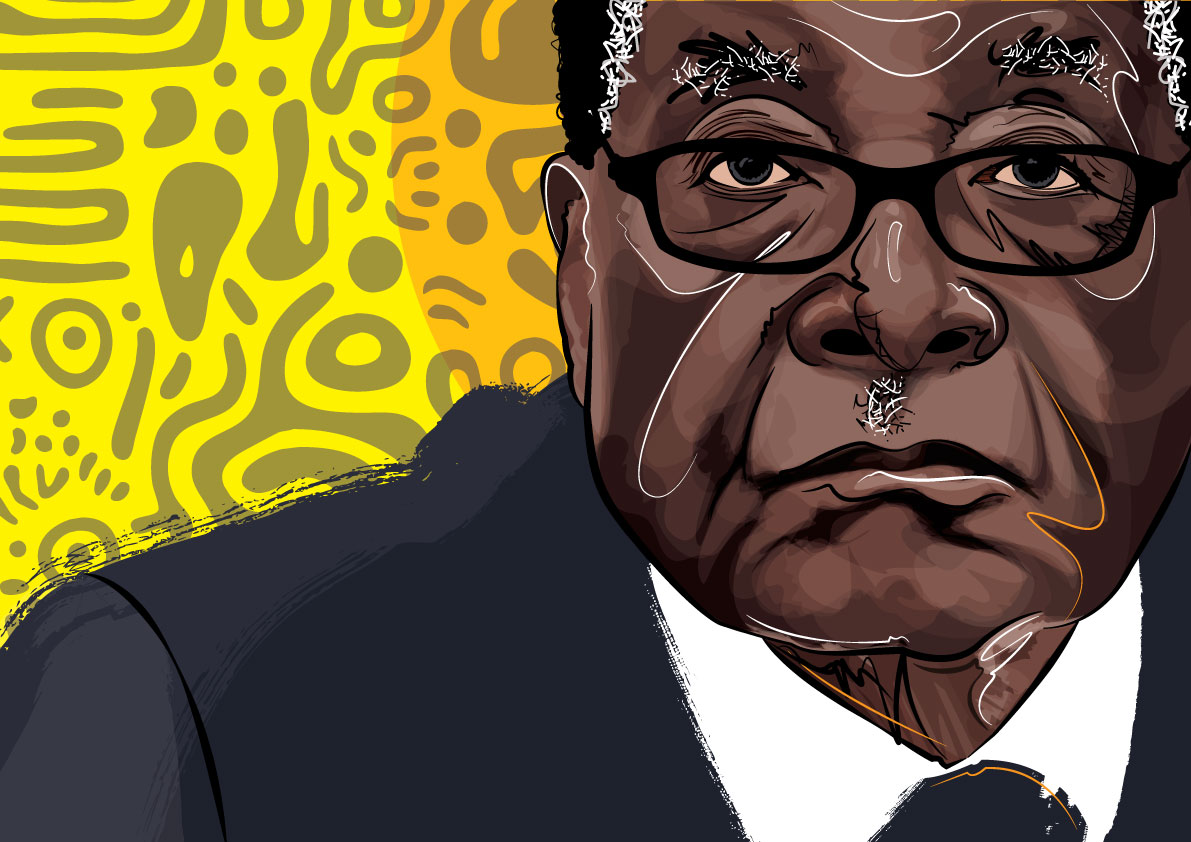
The artwork presents a striking, highly stylized digital portrait of the late Robert Mugabe, Zimbabwe’s former prime minister and president. Through a compelling blend of graphic design, stark color contrast, and expressive line work, the piece transcends a simple likeness to offer a complex visual commentary on the weight of history and political legacy.

The immediate impact of the portrait lies in its bold use of contrast, both in color and form. The composition is deliberately asymmetrical, pushing the subject to the right foreground while dedicating the left hemisphere to a vibrant, patterned background.

This background utilizes a brilliant, sun-drenched yellow, overlaid with abstract, organic shapes in a darker mustard tone. These fluid, amoeba-like patterns evoke a sense of movement and vitality, reminiscent of traditional African textile motifs or contemporary graphic design vernacular from the southern African region. Against this energetic backdrop, the figure of Mugabe is rendered as an immovable monolith. Clad in a dark, heavy suit with a crisp white collar, the subject anchors the piece, creating a stark visual dichotomy between the vibrant spirit represented by the background and the somber, heavy reality of the figure.

The artist employs a modern digital illustration technique that relies on distinct, color-blocked shading to build the topography of the face. The heavy folds of skin, the prominent brow, and the set jawline are carved out with deep browns and shadowed blacks, emphasizing the subject’s advanced age and the uncompromising nature of his expression.

What elevates the piece beyond standard vector illustration is the deliberate application of erratic line work. Frantic, scribbled white lines are etched over the hair, the mustache, and the contours of the cheeks, alongside a singular, sweeping orange contour line framing the right side of the face. These textured interruptions break the clean, digital aesthetic. They introduce a sense of nervous energy, tension, or perhaps the fraying edges of a long, deeply controversial tenure.

The portrayal centers heavily on the subject’s intense, unyielding gaze behind his iconic thick-rimmed glasses. The artist has chosen to depict Mugabe with a profound solemnity. The heavy lines framing the mouth and eyes convey a deep weariness, yet the posture remains rigid and authoritative. It is a face marked by decades of power, capturing the formidable and often intimidating presence he commanded on the global stage.

This artwork serves as a potent example of contemporary political portraiture. By juxtaposing the heavy, textured, and somber realism of the subject against a bright, abstract, and energetic background, the illustration captures the profound complexities of a historical figure. It is a piece that does not necessarily celebrate or condemn, but rather visually articulates the undeniable gravity, the enduring tension, and the deeply rooted historical imprint of its subject.

Vibrancy and Grit 750 360 admin

Vibrancy and Grit

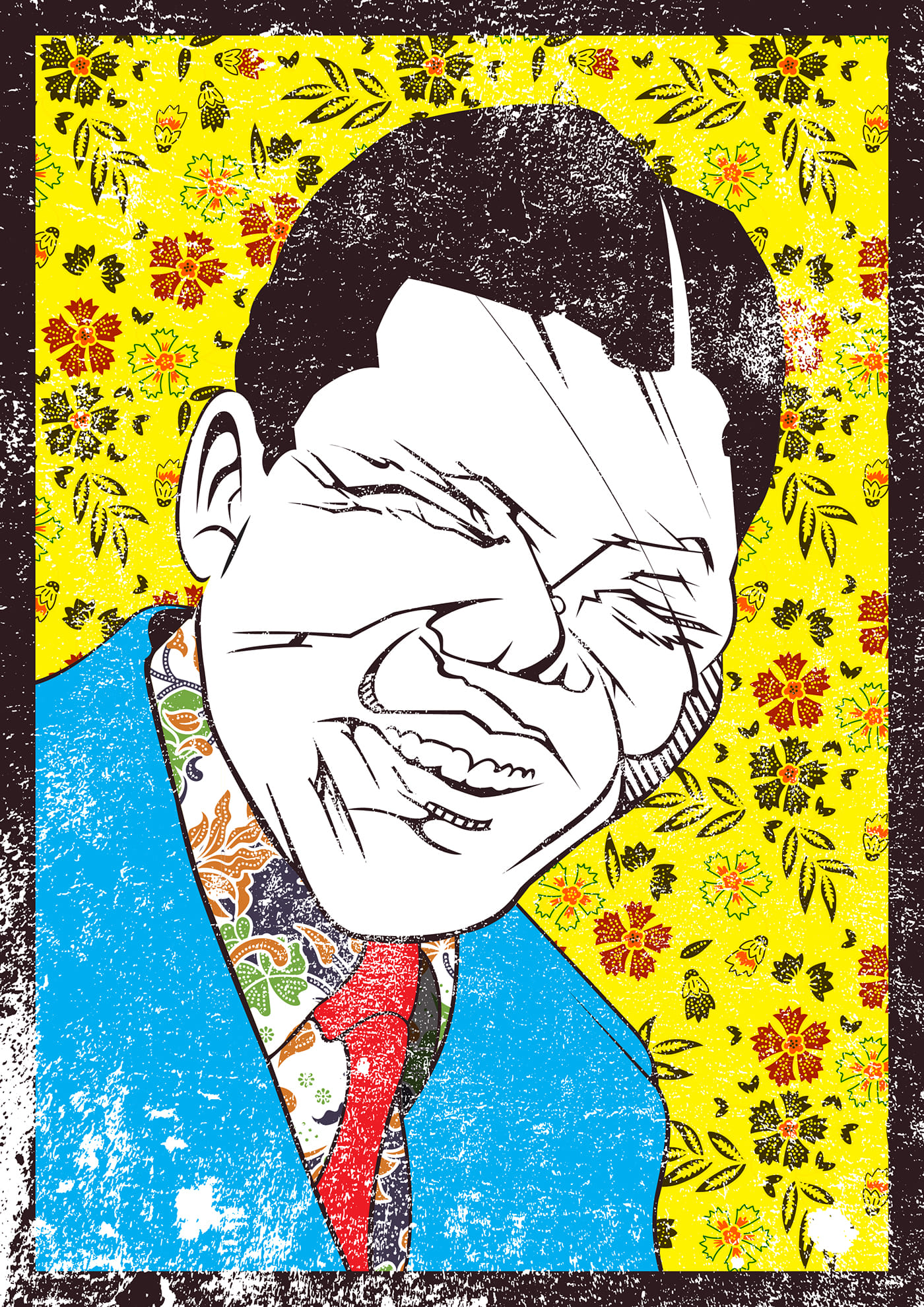
The artwork offers a striking, contemporary portrayal of one of modern history’s most recognizable figures: Nelson Mandela. Moving away from traditional, solemn portraiture, this piece embraces a bold, pop-art aesthetic that perfectly encapsulates the dual nature of Mandela’s legacy—the heavy wear of his long struggle for justice, and the unyielding, vibrant optimism that defined his leadership.


At first glance, the artwork commands attention through its high-contrast, stencil-like illustration style.

The Distressed Texture: A heavy, grunge-like overlay weathers the entire composition. The speckling and scratched edges evoke the feel of street art or a vintage, sun-beaten poster. This ruggedness is not just a stylistic choice; it serves as a visual metaphor for the friction, hardship, and gritty reality of the anti-apartheid struggle.

The Line Work: The facial features are rendered with harsh, deliberate black-and-white lines. Rather than softening his face, the deep creases around his eyes and mouth are exaggerated, mapping out a lifetime of endurance and wisdom.

Contrasting sharply with the stark black-and-white face is an explosion of unapologetic color. The palette tells its own story of a liberated, joyful South Africa.

The Floral Background: The subject is framed against a brilliant, mustard-yellow backdrop adorned with a dense, repeating floral pattern. The yellow radiates warmth and energy, while the blooming flora suggests themes of growth, spring, and the rebirth of a nation.

Sartorial Symbolism: The striking cyan-blue jacket paired with a boldly patterned shirt and red tie nods to Mandela’s famous sartorial choice—the “Madiba shirt.” The intricate, batik-style patterns peering out from the collar and tie anchor the piece in African textile traditions, celebrating cultural pride and identity.

The focal point of the piece, despite the loud colors and heavy textures, remains the expression on Mandela’s face. The artist has captured him in a moment of genuine, crinkled-eye joy. This familiar, radiant smile humanizes the political icon. It reminds the viewer that his ultimate triumph was not just political liberation, but the retention of his humanity, warmth, and capacity for joy after decades of imprisonment.

This artwork is a powerful celebration of Nelson Mandela’s spirit. By merging the raw, distressed textures of street art with the bright, optimistic colors of pop art, the piece captures a profound truth about Madiba: he was a man forged in immense hardship, who ultimately gifted the world a legacy of bright, enduring hope.

The Bold RSA Art in 2026 750 360 admin

The Bold RSA Art in 2026

If you step into a gallery in Johannesburg or Cape Town today, you aren’t just looking at “art.” You’re witnessing a conversation. South African art has always been a mirror to its soul shifting from the resistance-heavy narratives of the 20th century to a modern, multi-sensory explosion that is currently taking the global stage by storm.

As we move through 2026, the scene is no longer just about the “struggle.” It’s about identity, futuristic heritage, and a radical reclaiming of space.

While global legends like William Kentridge and Zanele Muholi continue to anchor the scene, a new generation of “auction powerhouses” is redefining the market.
Cinga Samson: Known for his moody, large-scale oil portraits, Samson has become a global phenomenon, with his work commanding record prices at Christie’s and Sotheby’s.
Bronwyn Katz: The 2026 Standard Bank Young Artist for Visual Arts, Katz uses sculpture and installation to explore “embodied knowledge”—how memory lives in the land and materials rather than just in books.
Dr. Esther Mahlangu: At 90+, the Ndebele icon remains a force of nature. Her 2025/2026 retrospective at the Iziko South African National Gallery has solidified her legacy as the bridge between traditional Ndebele geometry and global contemporary pop.

A major trend this year is the blurring of lines between “fine art,” “craft,” and “high design.” South African artists are no longer accepting the “craft” label as a secondary tier.
The Herd (Mbali Mthethwa): Reimagining traditional beadwork as a “living language,” Mthethwa turns ancient techniques into high-end contemporary art.
Chuma Maweni: A master ceramicist whose precision-engineered clay pieces bridge the gap between indigenous wisdom and modern, industrial forms.
MaXhosa Africa: Laduma Ngxokolo’s Xhosa-inspired knitwear has moved beyond fashion to become a symbol of African premium design, often exhibited in galleries as textile art.

Art in South Africa has never been “safe,” and 2026 is no exception. The recent withdrawal of South Africa from the Venice Biennale sparked a national debate about freedom of expression.

The controversy centered on artist Gabrielle Goliath, whose proposed work—a tribute to victims of state violence—was labeled “polarizing” by the government. The ensuing legal battle and the country’s subsequent absence from the Biennale have reminded the world that South African artists remain at the forefront of political and social critique, refusing to be silenced by state agendas.

If you’re looking to dive in, these are the current “must-visit” hubs:

Venue City Why Visit?
Zeitz MOCAA Cape Town The world’s largest museum dedicated to contemporary art from Africa.
Pretoria Art Museum Pretoria Currently hosting “A Story of South African Art,” a perfect syllabus-style overview.
The Melrose Gallery Johannesburg The global home of Esther Mahlangu and cutting-edge Pan-African photography.
Norval Foundation Cape Town Hosting the Sovereign African Art Prize finalists through early 2026.


South African art in 2026 is unapologetic. It is an art scene that honors its ancestors through material and motif, while simultaneously pushing into digital, sculptural, and activist frontiers. It isn’t just something to look at; it’s something to feel, debate, and—increasingly—to invest in.

The Geometry of Inequality 920 436 admin

The Geometry of Inequality

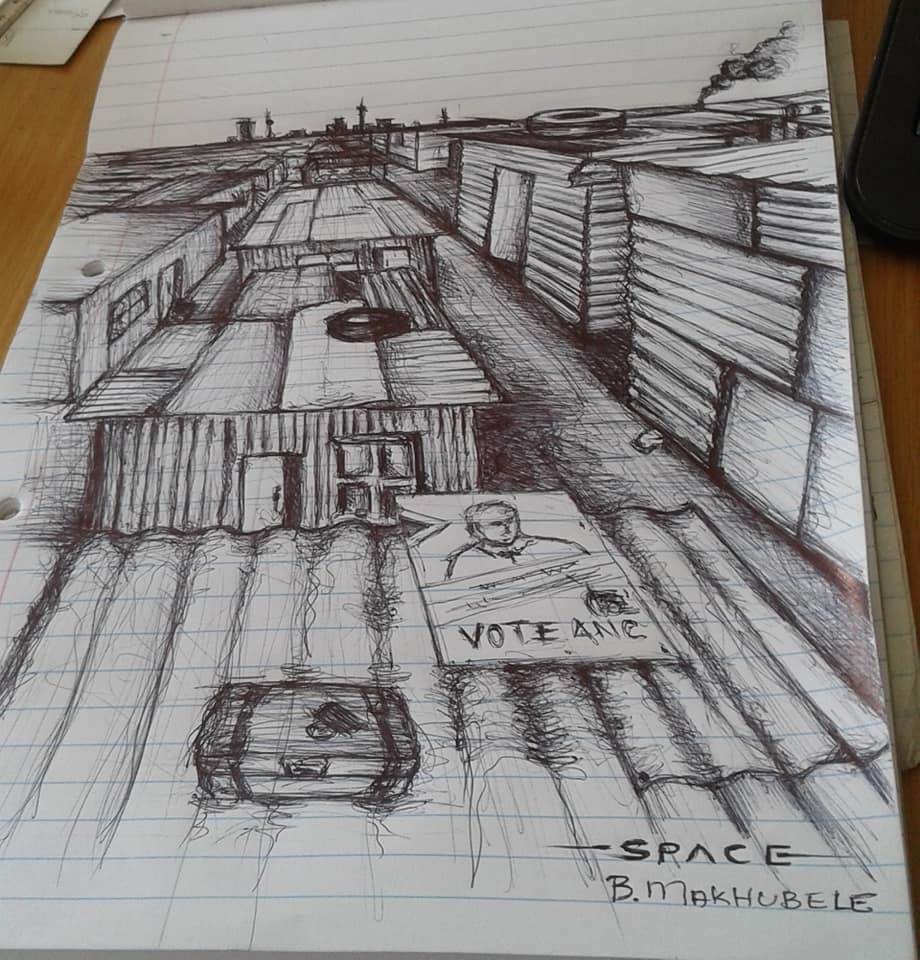
In the world of fine art, we often look for beauty in symmetry and light. But sometimes, the most profound “fine art” isn’t found in a gallery; it’s sketched in the margins of a notebook, born from the lived reality of the streets.

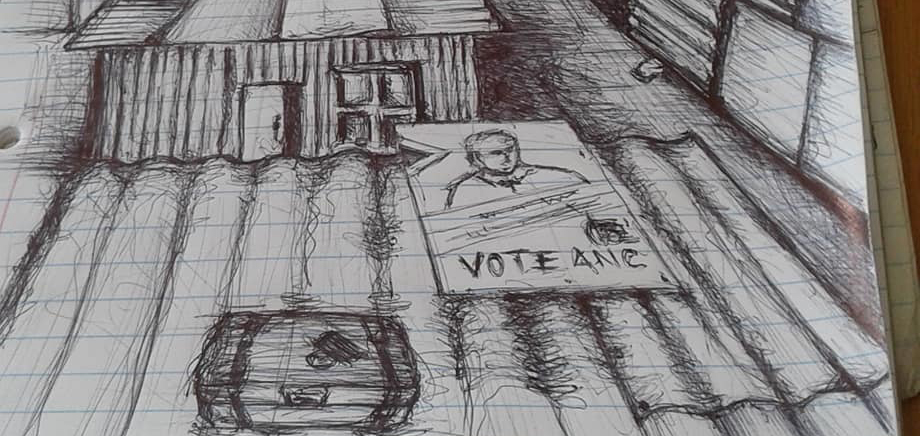
A sketch, titled “SPACE,” is a hauntingly precise exploration of the South African experience—a study of how we live, how we are governed, and the physical distance between promise and reality.


The first thing that strikes you is the perspective. The artist uses sharp, converging lines to lead the eye down a narrow alleyway of corrugated iron shacks (informal settlements). At the very end of this “street,” looming on the distant horizon, is the silhouette of a modern city skyline, featuring the unmistakable Hillbrow Tower.

The contrast is jarring:
The Foreground:
Corrugated metal, tires used to hold down roofs, and the claustrophobic density of poverty.
The Background: The “Golden City,” a distant dream that feels miles away despite being visible.
The Paper Weight: Politics on the Roof. In the center of the frame, weighted down on a corrugated roof, lies a discarded political poster. It reads “VOTE ANC.” There is a biting irony here. In many informal settlements, political posters are repurposed after elections—used as insulation, patches for leaking roofs, or simply left as litter. By placing the poster in the muck of the foreground, Makhubele highlights the disconnect between the high-flying rhetoric of political campaigns and the stagnant daily life of the voters. The “Space” between the ballot box and the kitchen table remains an unbridgeable chasm.

The title is perhaps the most provocative part of the piece. In a township or informal settlement, “space” is a luxury. People live wall-to-wall, roof-to-roof.
Physical Space: The crushing density of the shacks.
Economic Space: The gap between the poor foreground and the wealthy background.
Mental Space: The aspiration to move from the cramped margins to the open skyline.

Executed in what appears to be simple ballpoint pen on a piece of lined school paper, the medium mirrors the subject. It is resourceful, gritty, and immediate. There are no expensive oils or canvases here—just the tools available to someone with a story that needs to be told now.

Final Thoughts”SPACE” isn’t just a drawing of a township; it’s a map of a social condition. It asks us to look at the parts of our society that we often drive past on the highway. It reminds us that while the skyline represents where we want to be, the foreground is where millions currently are.